
History of Noorpur Thal
Raja Noor Elahi Atif, Representative Sargodha Lahore international London
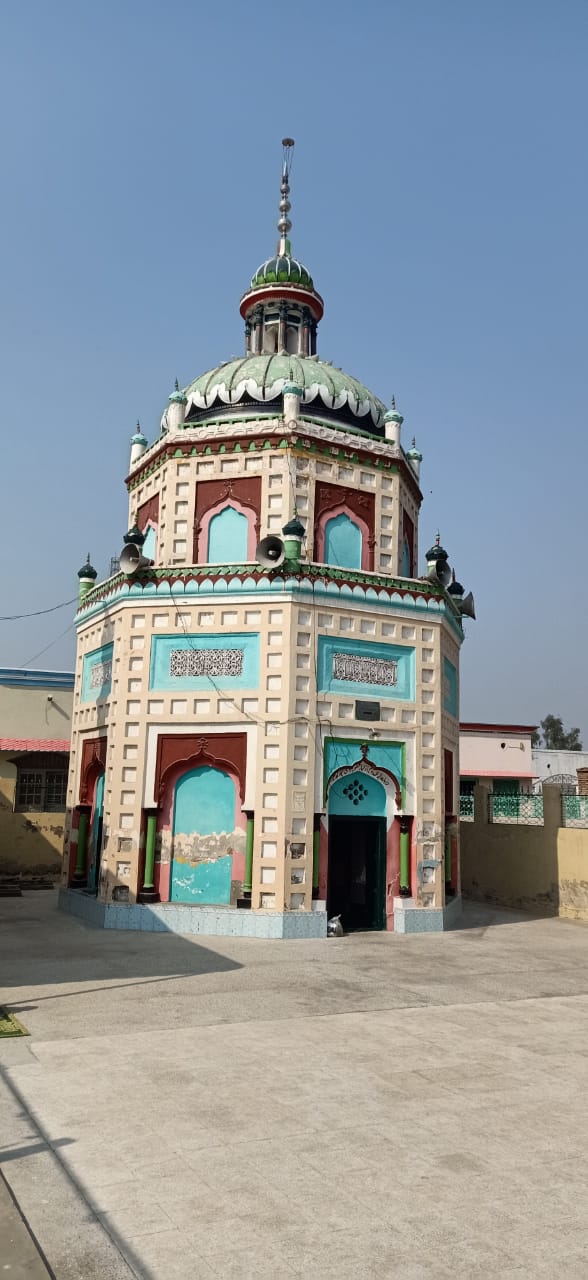 To some of us Noorpur Thal is just an area of deserts . But if we take the trouble to explorer we will discover a hidden Noorpur Thal that is steep in history and has some amazing stories to tell. One such treasure is a “well ” located near main bazar known as ” well of Noor Hasan Ghazai” . Similarly , a mosque naming ” Munshian waali Masjid “, according to history , Syed Noor Hasan Ghazi along with his companion Hazrat Sheikh Jeevan Rajput Naroo stopped here. They dug out a well here and also built the foresaid mosque. Both the friends settled near the well. Then the” basti” had no proper name. Before, partition there were many engraved with images of the deity. However, soon after partition the monuments (Hindu deities) were torn down , This “Basti ” with the passage of time was named Noorpur Thal. Today” Masjid Munshian Waali “stands in the city. Over the years the area around the “well” developed into a commercial hub run by Hindu merchants, after partition these merchants fled to India while immigrants from over there camped , nearby this well and the shrine of Hazrat Baba Sakhi Syedan Shah. Today there is no sign, of the historical “well ” that records the historical legacy of this site , although there is government primary school No 2 Noorpur , at the place of that historical well.The area around the well is now home of many herbal medicine outlets and other shopkeepers, as you move further towards Eastside you come to the shrine of Hazrat Baba Sakhi Syedan Shah , this shrine was built a long time ago. Noorpur was a small town in 1971. It was notified as tehsil headquarter in 1982. The tehsil had a total of 148551 acres of state land in 22 Dehs (villages) called Rakhs: approximately 129436 acres have either been alloted/reserved in permanent schemes while 2015 acres stand reserved for “Abadi Deh ” and 19115 acres of land remains as balancec state land with the following break up balance state land in 22 Rakhs, total balance state land 21130 acres. Noorpur Thal has lost most of its indigenous flora , comprising of various trees , shrubs, scrubs and grasses , to extensive gram cultivation.
life of the people living in Thal is very simple. They rarely eat vegetables, beef, mutton or pluses. They also eat wheat. The life as we known in the metropolitan cities cannot even be imagined by the village people. Noorpur Thal features an arid climate with very hot Summer and mild Winter. Gram and wheat are main crops grown in Thal. Moreover, bajra and lentils (masoor) , mash and mong ,are also grown in minor quantities . Agricultural land also provides a platform for the livelihood of inhabitants of Thal to grow for their livestock which consequently opens other trade options such as dairy products units, animal and poultry fodder , cattle/Sheep/goat fattening plants and meat. Although the literacy rate is very low still in Thal but it is increasing speedly. Noorpur Thal has also entertainment farms and resorts on the suburbs which serve as a relaxing escape from fatigued daily working life. There are lots of local events in Thal like spring festival, Urs of Hazrat Baba Sakhi Sayden Shah, Hazrat Mehmood Shaheed , horse and cattle shows etc add attraction to the citizen of Noorpur Thal. The prime attraction of Noorpur city are its mausoleums of Hazrat Baba Sakhi Sayden Shah and Hazrat Baba Roshan Shah. Other the most famous mausoleums in Thal are of Hazrat Sheikh Jeevan Rajput Naroo, Hazrat Mehmood Shahee, Hazrat Nikroo Shaheed , Hazrat Musa Shaheed and Hazrat Mian Manjha. According to history, there were many Hindu temples in Thal . There was a Datti Rani temple, which was located near main bazar Noorrpur. The temple was a beacon of activity during the Hindu festivals of Ram , Dussehra, Janmastami and especially during Holi and Diwali . Noorpur is thick populated area in Thal and interestingly it is at the junction of Khushab, Mianwali, Jhang, Bhakhar and Sargodh.